
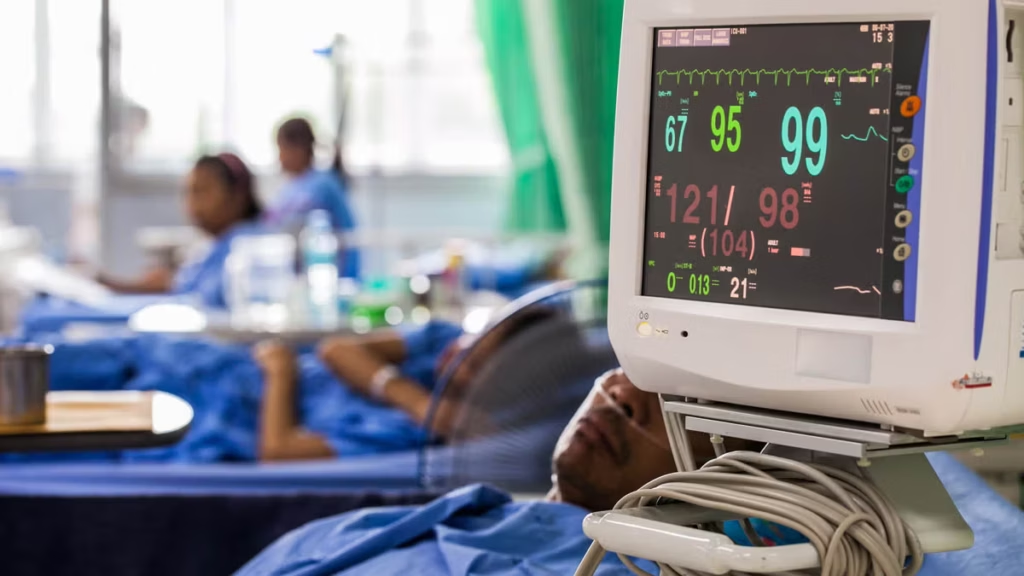
While the Georgetown Public Hospital Corporation (GPHC) manages a considerable number of patients on suicide watch every day, Chief Executive Officer (CEO) Robbie Rambarran said the hospital is enforcing strict monitoring to ensure safety.
Speaking on the May 31st episode of the Starting Point Podcast, Rambarran described mental health care as one of the most challenging aspects of the hospital’s work and said staff continue to grapple with the emotional toll of caring for patients at risk of self-harm.
“It’s quite an overwhelming number of patients that we have on a daily basis that are on suicide watch,” he said. “It’s in the double digit.”
Rambarran’s comments come as the hospital continues to strengthen its approach to monitoring vulnerable patients after several deaths occurred within a short period at the institution.
He recalled one case involving a patient who had survived a serious self-inflicted injury and was placed in a secured room under observation. According to Rambarran, the patient later escaped through a window after a nurse briefly left the room.
The incident prompted the hospital to make physical changes to parts of the facility, including installing grills on windows despite concerns about how such measures could affect emergency evacuations during events such as fires.
“We had to put them there because we can’t continue to risk this,” Rambarran said.
Beyond infrastructure changes, the hospital has increased patient monitoring, assigning dedicated staff to high-risk patients and introducing stricter procedures for supervision. Staff members are now required to ensure a replacement is present before leaving a patient under observation.
Rambarran said the GPHC has also reviewed its policies and procedures that must be followed, along with ensuring additional training for staff to strengthen their response to mental health emergencies.
According to Rambarran, one of the most common concerns raised by patients is a lack of family support. “Almost every one of our patients have complained about this,” he said.
The CEO added that hospital staff routinely involve relatives, adding that counselling, family engagement and ongoing support from doctors have helped many patients improve.
“Once they’re in our care and we start talking to them, we get the doctors to work, the social workers, get the family involved and have some conversations… ” We see it’s been working and that’s what we want,” Rambarran said.